RogueChef
“It IS all about the TASTE”-
Meatless Monday – Fried Orka
Posted on May 20th, 2013 No comments
In keeping with my home cooking, comfort food bend of mind, another favorite dish from you youth. Some people just rebel at the thought, but young orka, rolled in corn meal, and allowed to firm up, then deep fried is a sweet taste treat of a side dish.
Background
The name okra is most often used in the United States, with a variant pronunciation, English Caribbean okro. The word okra is of West African origin and is cognate with ọkwurụ in the Igbo language spoken in Nigeria. Okra is often known as “lady’s fingers” outside of the United States. In various Bantu languages, okra is called kingombo or a variant thereof, and this is the origin of its name in Portuguese (quiabo), Spanish (quimbombó or guigambó), Dutch and French, and also possibly of the name “gumbo”, used in parts of the United States and English-speaking Caribbean for either the vegetable or a stew based on it. In India and Pakistan, and often in the United Kingdom, it is called by its Hindi/Urdu name, bhindi, bhendi, bendai or “bhinda”. In Tamilnadu ,India it is called as Vendaikai.The products of the plant are mucilaginous, resulting in the characteristic “goo” or slime when the seed pods are cooked; the mucilage contains a usable form of soluble fiber. Some people cook okra this way, others prefer to minimize sliminess; keeping the pods intact, and brief cooking, for example stir-frying, help to achieve this. Cooking with acidic ingredients such as a few drops of lemon juice, tomatoes, or vinegar may help. Alternatively, the pods can be sliced thinly and cooked for a long time so the mucilage dissolves, as in gumbo. The cooked leaves can also be used as a powerful soup thickener. The immature pods may also be pickled.
Okra is richer in potassium than bananas and has nearly twice as much calcium gram for gram as milk. 100g supplies a third of the recommended daily intake of magnesium (needed for energy release and healthy nerves) and more than 10 per cent of the RDA for iron. Okra is also a source of fiber – stir-fried okra contains much fiber as whole wheat bread. In addition it is quite a good source of vitamin C and the antioxidant betacarotene, which has a range of benefits, including protection against cancer and heart disease by helping to neutralise free radicals.
Okra is one of those “binary foods” where people seem to hate it or love it, just like mushrooms, seaweed, and tofu. The hate is usually because of the gooey slime that coats the okra, but that is not a preordained fate
Okra becomes slimy when cooked with a moist method—in a stew, curry, gumbo (in all these the sliminess helps to thicken the overall dish), or a steamer basket. Stir-frying or sauteing in hot oil, in contrast, keeps the slime within the okra pieces, or perhaps causes the moisture in the mucilage to evaporate, thus improving the pods’ texture.
There are cooking techniques tol prevent your okra dish from being slimed. Indian food has many techniques of okra preparation, and I have three recommendations from my Indian friends.
- Trim just the very tip and the end of the okra and pan fry the whole okra pods until tender.
- Trim and round the pods then saute with onions and spices
- Trim SMALL okra pods, dredge in spices and corn meal / flour, and deep fry
Note : After you wash the okra pods, wipe them dry with a paper towel. Controlling moisture is the key to controlling the slime.
-
Sunday Chicken
Posted on May 19th, 2013 No commentsA rainy, dreary Sunday. A long unwelcome trip from upstate, an empty fridge, and three hungry cats. I am just so happy..
Off to the store, where chicken is on sale, and I get to watch people paw over the boneless, skinless, tasteless, anemic breasts. But off to the side is family packs of legs and thighs… Good, rich, flavorful, dark meat, perfect for frying or baking. As I have the deep fryer out, it looks like fried chicken fo rdinner
Fried chicken is a dish consisting of chicken pieces usually from broiler chickens which have been floured or battered and then pan fried, deep fried, or pressure fried. The breading adds a crisp coating or crust to the exterior. What separates fried chicken from other fried forms of chicken is that generally the chicken is cut at the joints and the bones and skin are left intact. Crisp well-seasoned skin, rendered of excess fat, is a hallmark of well made fried chicken.
Generally, chickens are not fried whole; instead, the chicken is divided into its four main constituent pieces: the two white meat sections are the breast and the wing from the front of the chicken, while the dark meat sections are from the rear of the chicken. To prepare the chicken pieces for frying, they are dredged in flour or a similar dry substance (possibly following marination or dipping in milk or buttermilk) to coat the meat and to develop a crust. Seasonings such as salt, pepper, cayenne pepper, paprika, garlic powder, onion powder, or ranch dressing mix can be mixed in with the flour. As the pieces of chicken cook, some of the moisture that exudes from the chicken is absorbed by the coating of flour and browns along with the flour, creating a flavorful crust. Traditionally, lard is used to fry the chicken, but corn oil, peanut oil, canola oil, or vegetable oil are also frequently used. The flavor of olive oil is generally considered too strong to be used for traditional fried chicken, and its low smoke point makes it unsuitable for use.
Read the rest of this entry » -
Pasta Carbonara
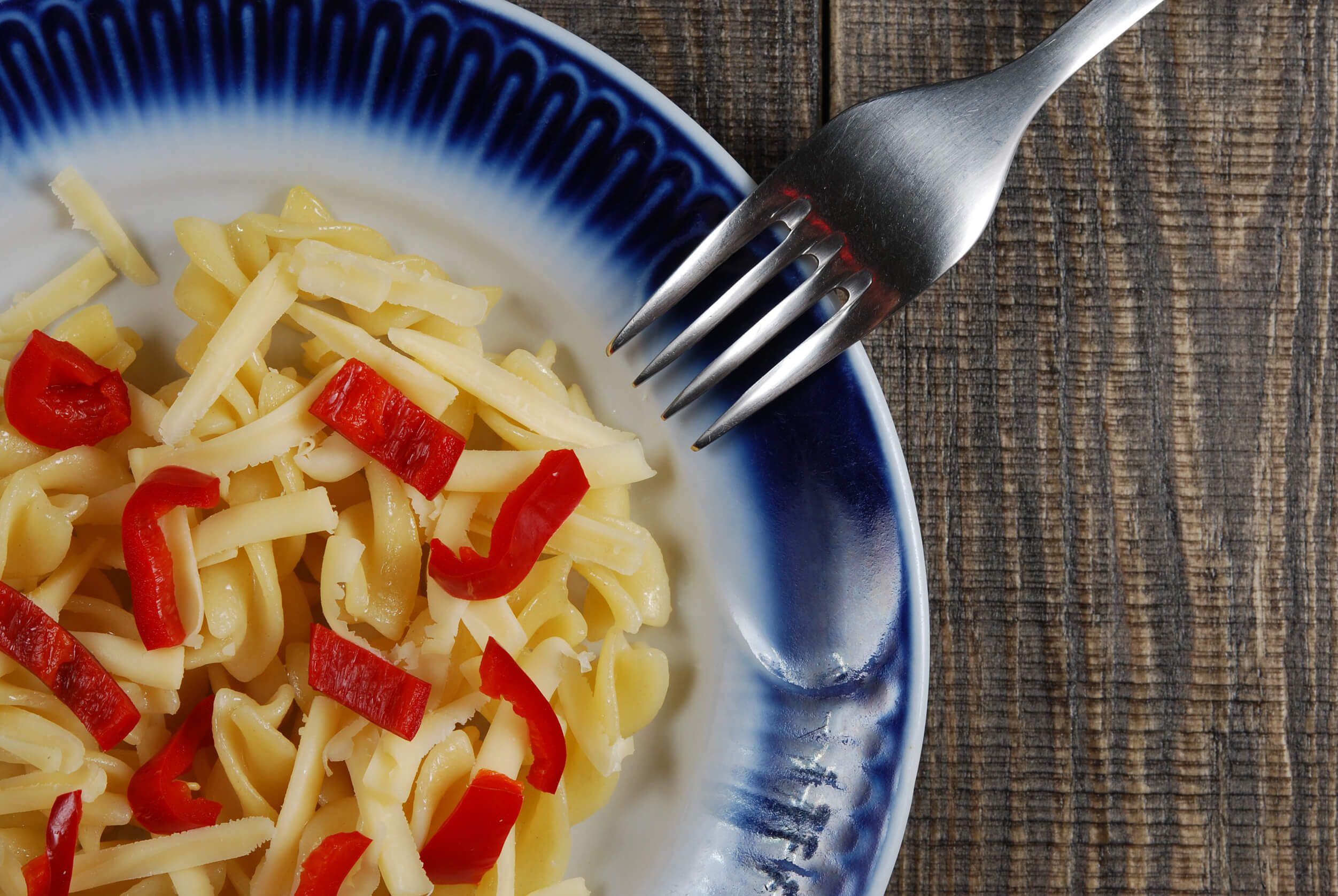
Posted on May 15th, 2013 3 commentsThis is why I will die of chronic cholesterol. It is also why I will die happy…. For those of you who have read my post about hedonism, this is quite indulgent, and ooohhh so simple. There are many rewards to using only the freshest cream and butter, the finest of cheese, and the best of pasta. Truly, a RogueChef classic.
Carbonara is an Italian pasta dish from Latium, and more specifically to Rome, based on eggs, cheese (Pecorino Romano or Parmigiano-Reggiano), bacon (guanciale or pancetta), and black pepper. Spaghetti is usually used as the pasta, however, fettuccine, rigatoni or bucatini can also be used. The dish was created in the middle of the 20th century.
The pork is cooked in fat, which may be olive oil, lard, or less frequently butter. The hot pasta is combined with a mixture of raw eggs, cheese, and a fat (butter, olive oil, or cream) away from additional direct heat to avoid coagulating the egg, either in the pasta pot or in a serving dish. The eggs should create a creamy sauce, and not curdle. Guanciale is the most commonly used meat, but pancetta and local bacon are also used. Versions of this recipe may differ in how the egg is added: some people use the whole egg, while other people use only the yolk; intermediate versions with some whole eggs and some yolk are also possible.
Cream is not common in Italian recipes, but is often used elsewhere. Garlic is similarly found mostly outside Italy.
Other variations on carbonara outside Italy may include peas, broccoli, mushrooms, or other vegetables. Many of these preparations have more sauce than the Italian versions. As with many other dishes, ersatz versions are made with commercial bottled sauces.
-
Baked Cheese
Posted on May 14th, 2013 1 commentOn my way back from a client in Brooklyn I passed a new establishment in Greenpoint, Brooklyn, where I found a very nice little appetizer of baked cheese.
The restaurant / lounge was less than packed so the owner / chef had a few minutes to chat. Of course, we all know who wheedled the recipe from him, and chatted about some possible addins..
Consider the well seasoned 12″ cast iron skillet, black, heavy and with it’s own baked on non stick surface. Now add cubed cheese, some olive oil, (my first add / change, bacon drippings or bacon cubes browned off in the skillet), thin sliced garlic, seasonings, and of course herbage. This is then baked until the cheese melts, bubbles, and browns.
This is then served bubbling hot, with a selection of thin slices of crusty french baguette, (Toasted and not toasted) and maybe the chunks of browned bacon on the side.
-
Meatless Monday – Fried Yellow Squash
Posted on May 13th, 2013 No commentsAgain a dish from my youth. Fresh from the garden squash, (yellow, summer, crook-neck, or zucchini), sliced thin, tossed in seasoned corn meal and quick fried, usually served hot. (actually, we just stood around the stove grabbing pieces off the plate as they came out for the frying pan.)
Background
Squashes generally refer to four species of the genus Cucurbita native to Mexico and Central America, natively grown in parts of North America, Europe, India, and Australia. In North America, squash is loosely grouped into summer squash or winter squash, as well as autumn squash depending on whether they are harvested as immature vegetables (summer squash) or mature vegetables (autumn squash or winter squash). Well known types of squash include the pumpkin and zucchini.When used for food, squash are usually picked when under 8in/20cm in length and the seeds are soft and immature. Mature squash can be as much as three feet long, but are often fibrous and not appetizing to eat. Squash with the flowers attached are a sign of a truly fresh and immature fruit, and are especially sought by many people.
-
Quick, To the Grill FatMan!!!!
Posted on May 10th, 2013 No commentsAs it is coming to Memorial Day and the opening of the grill season, it’s probably a prudent idea to review the basics of grilling. Here is a compilation of posts on grilling, the basics, hot dogs, hamburgers, and steaks ….
I was talking with Madam Bad Wolf, about our plans for the coming holiday, and the menu for said holiday and plans. She not so gently reminded me of some of my less memorable meals on the grill. This inspired me to start making notes on how to grill the more traditional items….
Do note: Grilling is NOT Bar-B-Que ….
Grilling is a form of cooking that involves dry heat applied to the surface of food, commonly from above or below. Food to be grilled is cooked on a grill (an open wire grid with a heat source above or below), a grill pan (similar to a frying pan, but with raised ridges to mimic the wires of an open grill), or griddle (a flat plate heated from below) . Heat transfer to the food when using a grill is primarily via thermal radiation. Heat transfer when using a grill pan or griddle is by direct conduction. In the United States, when the heat source for grilling comes from above, grilling is termed broiling. In this case, the pan that holds the food is called a broiler pan, and heat transfer is by thermal radiation.
Direct heat grilling can expose food to temperatures often in excess of 260 °C (500 °F). Grilled meat acquires a distinctive roast aroma from a chemical process called the Maillard reaction. The Maillard reaction only occurs when foods reach temperatures in excess of 155 °C (310 °F).
Read the rest of this entry »